Solar Contractors Near Me: Tips to Pick the Ideal Photovoltaic Panels for Your Roof by Lumina Solar
Solar Home Systems: Energy-Efficient Solar Solutions For Services Assist Minimize Functional Expenses And Promote Sustainability
Kinds Of Commercial Solar Panels
When diving into the world of industrial solar panels, it resembles going into a busy market filled with diverse choices, each assuring to harness the sun's unrelenting energy in its own distinct method. But have you ever wondered why some panels seem more effective or well-suited for certain roofs than others? The response depends on the very kind of solar panel picked.
Monocrystalline Solar Panels
Envision a panel born from a single crystal of silicon-- smooth, consistent, and efficient. That's the essence of monocrystalline photovoltaic panels. Known for their high effectiveness and durability, these panels typically boast a deep black look, nearly like a midnight canvas capturing every photon. Businesses that require optimal power output in restricted space typically gravitate toward this type. The journey to develop these panels is intricate, making them a bit steeper on the preliminary financial investment ladder.
Polycrystalline Solar Panels
In contrast, polycrystalline photovoltaic panels are like a mosaic of silicon fragments, merged together in a less uniform pattern. They sparkle with a bluish color, reflecting their multi-crystal makeup. While they usually use somewhat lower effectiveness than their monocrystalline cousins, they make up for it with a more wallet-friendly cost. For sprawling business roofs where area isn't a pressing concern, these panels offer a compelling balance between cost and performance. Ever noticed how a patchwork of blue tiles can cheer up a dull roof? That's polycrystalline doing its peaceful magic.
Thin-Film Solar Panels
There's the chameleon of the solar world: thin-film solar panels. Unlike the stiff silicon structures, these panels are lightweight, versatile, and can be used to surface areas conventional panels can't touch. Their sleek style whispers possibilities-- curved facades, irregular roofs, even building-integrated photovoltaics. This versatility comes with a compromise: typically lower performance and a shorter lifespan. Still, for certain business applications, especially where visual appeals fulfill development, thin-film panels are the dark horse worth thinking about.
Comparison Table of Commercial Solar Panel Types
| Type | Effectiveness | Cost | Look | Suitable Use |
|---|---|---|---|---|
| Monocrystalline | High (15-20%) | Higher | Black, uniform | Restricted area, high output |
| Polycrystalline | Moderate (13-16%) | Moderate | Blue, speckled | Big rooftops, cost-sensitive |
| Thin-Film | Lower (10-12%) | Lower | Varies, flexible | Innovative designs, versatile surfaces |
Picking the Right Panel: What Matters Many?
Is it performance? Toughness? Or possibly the aesthetic impact? Often, it's a blend of all three. One industrial property owner I know picked thin-film panels not due to the fact that they yielded the highest wattage, but because their building's curved roof required flexibility-- proof that the "best" panel depends heavily on the job's distinct demands.
What's your industrial rooftop whispering to you? Are you chasing raw power or architectural sophistication? The diverse kinds of commercial solar panels make sure there's a match waiting-- if just you listen carefully.
Preparation the Layout: More Than Simply Panels on a Roofing
Imagine a chessboard. Each solar panel is a piece that must be tactically put to record sunlight with surgical precision. The installation procedure for industrial solar systems typically begins with an in-depth site evaluation. Specialists analyze roofing orientation, shading patterns, and structural integrity. Did you understand that a minor discrepancy in panel angle can slash efficiency by as much as 15%? It's not practically slapping panels onto a rooftop; it's a complicated puzzle that demands foresight and careful preparation.
Step-by-Step Setup Breakdown
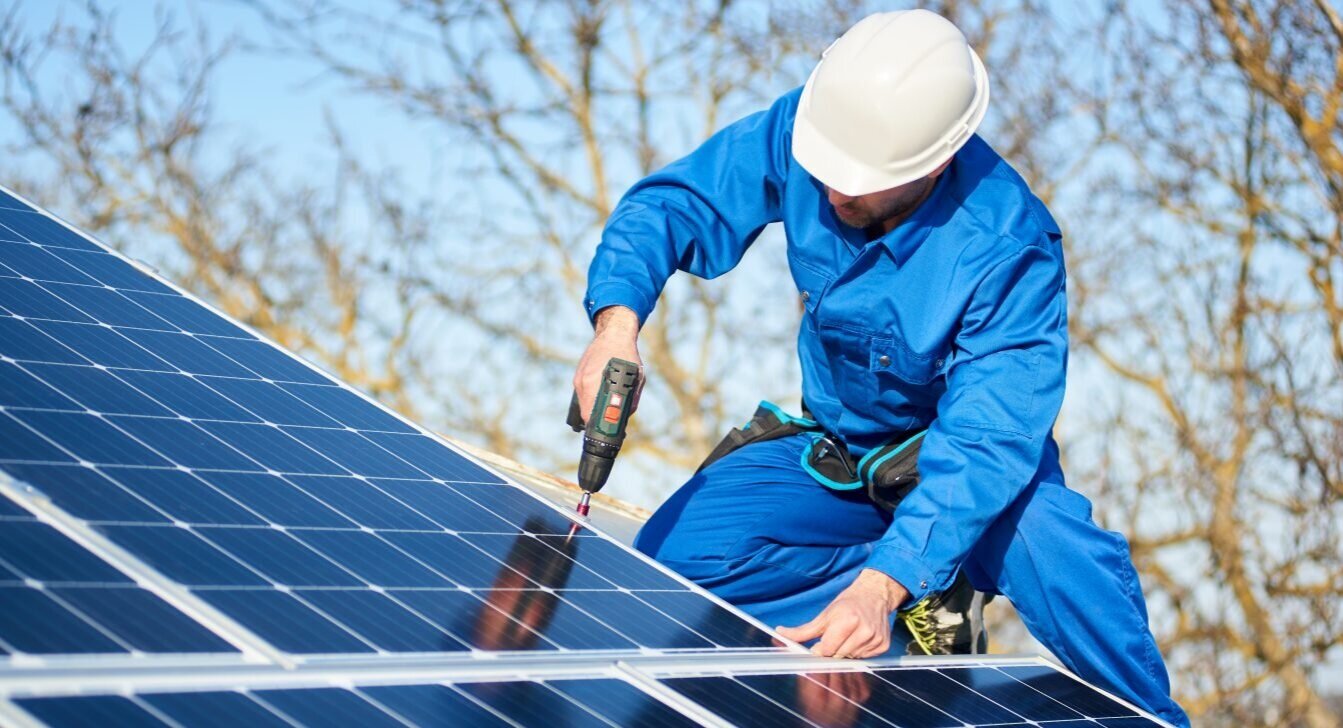
- Initial Site Survey: Surveyors determine the property and gather information on sunshine direct exposure throughout the year.
- Style Stage: Engineers prepare a customized design, considering load-bearing limits and electrical needs.
- Allowing Process: Browsing municipal approvals can be labyrinthine and time-consuming.
- Installing System Installation: The backbone of the system, this structure must hold up against weather extremes without compromising panel positioning.
- Panel Positioning: Panels are protected with accuracy; each connection is evaluated carefully to avoid energy loss.
- Electrical Wiring: Ranges from the ranges to the inverter must be carefully insulated and protected.
- System Testing: Before turning the switch, extensive performance checks guarantee every cell works harmoniously.
Structural Factors to consider: When the Roofing Tells You No
Not all industrial roofing systems are solar-friendly. Sometimes, the structure groans under the idea of added weight. It's not uncommon for installers to come across roof support needs. A misjudged weight distribution can cause costly repairs or system failure. For flat roofs, ballasted mounting systems-- using heavy products to protect panels without roof penetration-- provide a creative workaround, but they demand precise estimations to prevent shifting or water pooling.
Professional Tips for a Smooth Setup
- Carry out a thermal imaging scan to identify concealed roofing system weak points before setup.
- Choose top quality flashing products to prevent water ingress around installs.
- Plan conduit paths early; avoid future disturbance with heating and cooling systems or plumbing.
- Consider panel orientation fine-tunes for seasonal sun path changes, not just peak summer.
Why Timing and Weather Matter More Than You Believe
Early early morning fog or abrupt afternoon storms can turn a multi-day setup into a logistical problem. For industrial systems, arranging around regional weather patterns is important to prevent setup delays. Here's a secret: some installers use drone technology to keep an eye on site progress and ecological conditions in real-time, enabling quick adjustments to the project timeline. This mix of tradition and innovation takes full advantage of performance and ensures the system is operational faster.
Unlocking the Power: Why Business Solar Panels Matter
Think of a vast service complex, its roof glittering with photovoltaic panels absorbing the sun's relentless energy. This isn't simply a pretty image-- it's a tactical move that translates to severe functional strength. Why do savvy companies flock towards commercial solar panels? The answer lies underneath the surface of basic energy savings.
More than Simply Lower Bills
Yes, minimizing electricity expenses is a headline advantage, however the story dives deeper. Industrial solar installations act as a financial anchor, supporting energy costs versus the unforeseeable waves of market fluctuations. Picture this: a factory's electric bill spikes due to a sudden surge in need, yet their solar range cushions the blow, keeping operations smooth and costs foreseeable.
Environmental Trustworthiness that Pays Dividends
In today's eco-conscious market, the green credentials of a company can sway consumers and partners alike. Harnessing solar energy sends out a powerful message-- one that resonates with stakeholders who value sustainability. It's more than a badge; it's a beacon that can open doors to brand-new opportunities and partnerships.
Technical Edge and Performance
One neglected gem in business solar panels is their ability to incorporate with wise energy management systems. This synergy allows companies to keep an eye on and enhance energy usage in real-time, ejecting every watt of efficiency. It resembles having a watchful energy steward working 24/7, making sure resources aren't lost and operations remain lean.
Financial Flexibility: Beyond the Obvious
Organizations frequently are reluctant, concerned about in advance investments. Yet, savvy business understand that commercial photovoltaic panels can be structured through innovative funding models that spread out costs and speed up return on investment. This strategic technique can transform a substantial in advance expense into workable, predictable costs over time.
Professional Tips for Taking Full Advantage Of Advantages
- Conduct a detailed website assessment: Pinpoint the ideal panel placement to optimize sunlight direct exposure, representing seasonal modifications.
- Use tiered inverter systems: This improves system strength-- if one inverter dips, others keep the energy streaming, decreasing downtime.
- Take advantage of energy storage solutions:
- Consider battery integration to harness saved solar power throughout peak demand or failures, improving operational continuity.
- Stay ahead with predictive analytics:
- Usage data-driven insights to expect upkeep needs and prevent unanticipated dips in efficiency.
What's the Catch?
Let's face it-- setting up industrial solar panels isn't as easy as snapping fingers. Navigating the maze of installation logistics, roofing stability assessments, and energy output forecasts requires a sharp eye and careful preparation. Does your roofing angle capture enough sunlight throughout the year? Are shading and weather patterns represented? These concerns can make or break the efficacy of the system.
| Advantage | Effect | Expert Insight |
|---|---|---|
| Energy Cost Decrease | Long-lasting operational savings | Net metering can amplify cost savings by exporting surplus energy. |
| Brand name Sustainability | Stronger market placing | Visible solar arrays serve as a real-time ecological declaration. |
| Energy Independence | Decreased vulnerability to grid failures | Coupling with battery storage improves backup power abilities. |
Browsing the Intricacies of Commercial Solar Panel Implementation
Picture a vast roof, basking under the unrelenting sun, prepared to be changed into a powerhouse of green energy. Yet, underneath this promising vision lies a labyrinth of complexities that can journey up even the most skilled installers. One essential hurdle revolves around website assessment. It's not just about slapping panels on a roofing system; it has to do with deciphering the story the structure informs. Will the roof sustain the added weight? What about shadows cast by nearby structures or trees that alter with the seasons? These aspects can silently sabotage the effectiveness of a system if ignored.
Structural and Environmental Considerations
Industrial structures frequently have varied architectures, which suggests no 2 photovoltaic panel installations are the very same. A flat roof might appear ideal, however can it deal with snow loads or heavy rainfall without jeopardizing integrity? Alternatively, a sloped roofing system may present angle obstacles that decrease solar irradiance. Beyond the physical, ecological components demand regard. Dust accumulation, bird droppings, and pollen are quiet effectiveness killers. Understanding local climate nuances can spell the difference between peak efficiency and underwhelming output.
Allowing and Grid Affiliation: The Undetectable Labyrinth
When it pertains to hooking a business solar system to the grid, the paperwork marathon begins. It's a dance in Solar Equipment Providers between energies, towns, and sometimes federal bodies, each with their own pace. Delays and unexpected requirements can stall progress forever. Have you ever questioned why some jobs stretch on for months? The answer frequently lies hidden in this administrative web. Anticipating these procedural complexities upfront can conserve weeks, if not months, of downtime.
Professional Tips for Smoother Deployment
- Conduct numerous shading analyses at various times of the year to forecast seasonal performance dips.
- Engage structural engineers early to assess roof load capabilities and recommend supports if needed.
- Establish strong interaction channels with local utilities to preempt hold-ups in grid interconnection approvals.
- Leverage advanced modeling software application that imitates environmental effects over the system's lifespan.
- Strategy for modular scalability to accommodate future expansion without major overhauls.
Financial Forecasting Beyond Preliminary Costs
It's appealing to focus purely on upfront financial investment, but business solar projects typically face unforeseen expenses. Surprise expenses lurk in system optimization tweaks, unforeseen structural reinforcements, or perhaps extending timelines due to administrative downturns. A smart designer constantly develops in a contingency buffer. This monetary elasticity makes sure the project does not give in the weight of unanticipated turns.
| Common Release Aspect | Potential Complication | Proactive Technique |
|---|---|---|
| Site Access | Limited or harmful areas | Pre-installation site walkthroughs and run the risk of evaluations |
| Equipment Delivery | Logistical hold-ups due to large parts | Coordinate with suppliers for staged deliveries |
| Weather | Unexpected storms or heatwaves | Flexible scheduling and real-time weather tracking |
Releasing commercial photovoltaic panels isn't a linear journey; it's a vibrant puzzle needing foresight, versatility, and a deep understanding of both innovation and surface. The reward? A durable system that not only powers a business but likewise champs sustainability in a loud, fossil-fueled world.